
Caffeine: Chaos or Clarity? Considerations for Aviation Professionals.
Caffeine is one of the most commonly consumed substances by aviation professionals and the general public! Which makes sense given the high risk of aviation professionals for sleep deprivation and disrupted sleep. Caffeine has noticeable impacts on alertness and focus for shift workers and researchers have shown even small doses of caffeine (about 100-300 mg) make noticeable differences in performance for pilots who are sleep deprived (Caska & Molesworth, 2007). Because aviation professionals often have schedules that leave sleep a dream (pun intended), it helps to explore options to relieve sleepiness and performance concerns. For example, if you’re usually on a day shift, you might see benefits with several small doses of caffeine throughout the day, so having 65 mg of caffeine every 3-4 hours, rather than all at once, may help improve alertness.
Caffeine & Genetics
With all the potential benefits of caffeine, there are, of course, those of us who don’t respond well to caffeine or are sensitive to it. Your genetics play a significant role in how you break down caffeine and whether you feel AWESOME after consumption, or on edge and jittery. So, let’s take a closer look at a couple of the genes that are key players in how we metabolize caffeine: ADORA2A and CYP1A2.
ADORA2A is associated with how caffeine impacts your sleep, showing that some of us may have more sleep disruption than others when we consume caffeine. For pilots, air traffic controllers, and flight attendants, knowing how ADORA2A is coded may persuade you to reduce your caffeine throughout the day to improve your sleep. CYP1A2 is related to the liver’s breakdown of caffeine and for some individuals, that means breaking down caffeine more quickly than others!
Adjusting Caffeine to Your Unique Genetic Response
Just reading those descriptions, you may already recognize how your genes are operating in the background, but it may not be clear what to do next. Thankfully, you found Flight Crew Nutrition and we’re so glad you’re here! If you notice that you get anxiety or jittery with caffeine intake, you will do better with less, none, or different forms of caffeine. If you’re a slow metabolizer of caffeine, high doses could be detrimental to your performance and sleep. So, if caffeine seems to disrupt your precious sleep or makes you feel anxious and distracted, reduce the amount and avoid it 6-8 hours before your sleep cycle. This may look different for red-eye or night shifts, and having small doses throughout the shift may help you with alertness and reducing fatigue.
Different Forms of Caffeine
I mentioned different forms of caffeine? Yes, of course, there are differences in where you get your caffeine, nothing in nutrition science is simple - and I love it! Caffeine we get from green tea and black tea stimulates brain waves differently than coffee or caffeine supplements. If you’re sensitive to caffeine, try green tea and see how you feel as it has lower doses of caffeinel. Green tea is great because along with lower caffeine, it stimulates different brain waves that can have a calming effect. This is likely due to the l-theanine in green tea that helps to block some of the stimulating effects of caffeine - it’s so cool! Supplemental caffeine found in energy drinks, tablets, sports drinks, or other exercise supplements typically hit faster than other caffeine options, so you might feel the effect faster. Again, try lower doses and see how you feel. Typically it takes about 30 minutes for caffeine to get to the bloodstream and you’ll hit the peak in about 60-90 minutes, but that can vary depending on individual factors.
The Downside of Caffeine
With all the love caffeine can give, it has downsides. Caffeine can increase blood pressure, reduce total sleep time, and as mentioned above can cause anxious feelings for some. The best way to reduce these side effects is to have a healthy balance of caffeine, and for most people that’s having less than 300 mg of caffeine a day.
Caffeine Doses
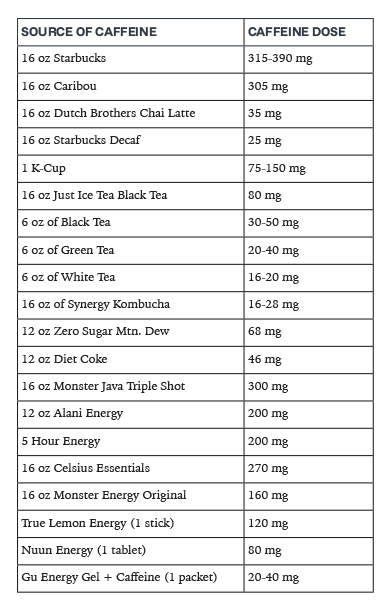
So how much caffeine is in my food and beverages? Let’s check it out (these values were taken from the Center for Public Interest - check out their full list of caffeine amounts in snacks and drinks).
If you're curious what your genetic markers indicate about how your body processes caffeine, schedule a consultation today!